
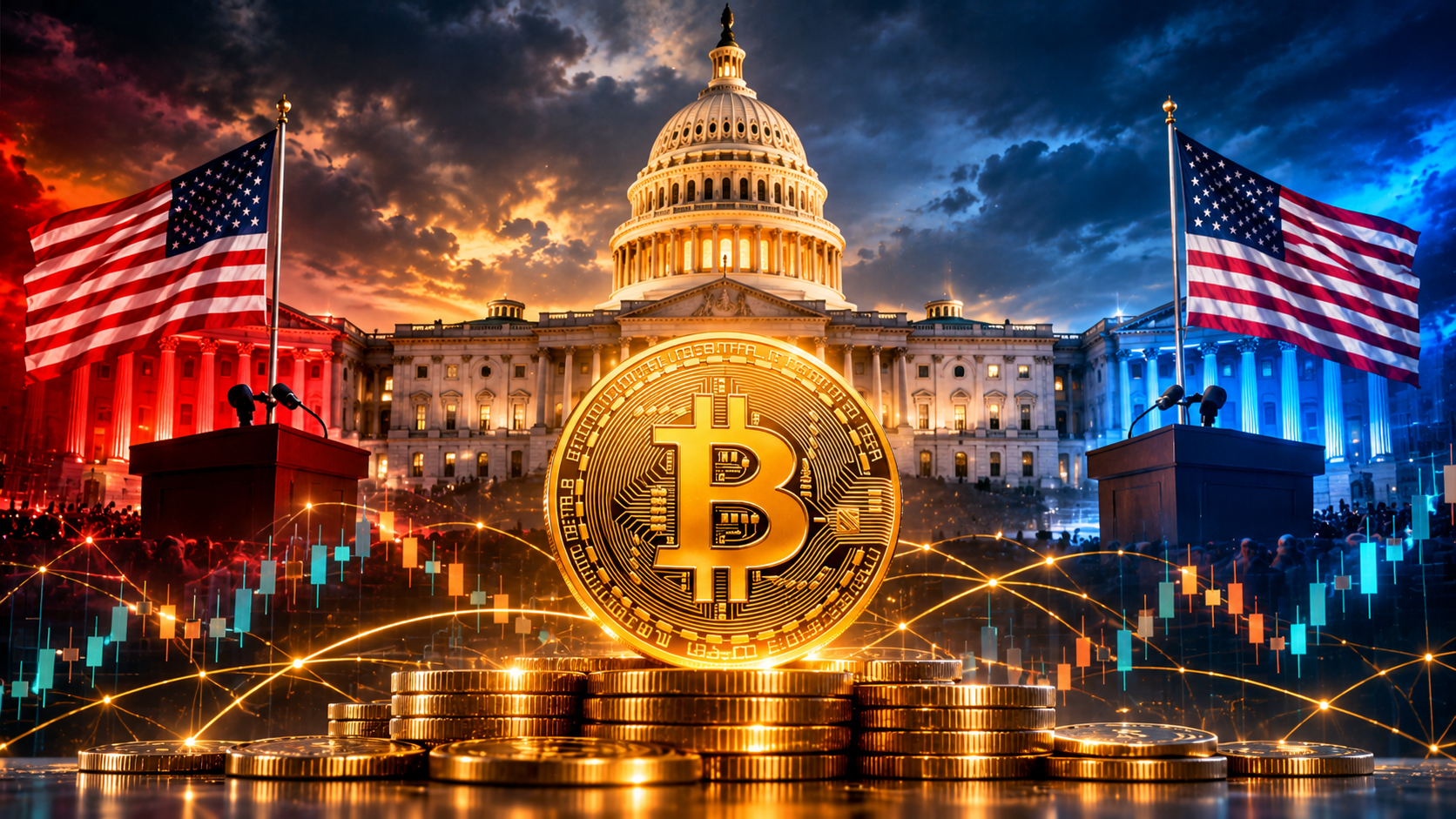
Bitcoin Just Won Support on Both Sides of US Politics: Two Pro-Reserve Candidates Win Key Elections
Bitcoin has gained something that the cryptocurrency industry has been trying to build for years: political support that crosses party lines.
In the latest US midterm elections, two candidates with records of supporting Bitcoin reserves secured major victories. Republican Byron Donalds won Florida's gubernatorial race, while Democrat James Talarico won the Texas US Senate race, according to TokenPost's November 4 report.
The two politicians come from opposite sides of the political spectrum, but both have previously supported proposals to hold Bitcoin as a strategic reserve asset.
Their victories do not mean that a new Bitcoin reserve has been approved at the federal level. However, they put two politicians with documented Bitcoin-reserve positions into influential offices and add another dimension to the debate over cryptocurrency policy in the United States.
For an industry that has often found itself caught in partisan political arguments, the result carries a wider message: Bitcoin reserve discussions are no longer limited to one party.
Two Election Victories, One Bitcoin Connection
The two candidates supported Bitcoin reserve initiatives at different levels of government.
Byron Donalds: Republican winner in Florida
Donalds defeated Democrat David Jolly in the Florida gubernatorial election.
During his time in Congress, Donalds introduced H.R. 2112, a bill concerning a federal strategic Bitcoin and digital-asset reserve. The proposal sought to give statutory force to an executive order related to the federal government's strategic Bitcoin reserve and digital-asset stockpile.
He also discussed the possibility of a strategic reserve for Florida during his gubernatorial campaign.
His election victory places a politician who has previously advocated Bitcoin reserve legislation in the governor's office of one of the largest US states.
However, his election does not automatically establish a Florida Bitcoin reserve. Any state-level policy would still require the relevant legal and administrative steps.
James Talarico: Democrat winner in Texas
Talarico defeated Republican Ken Paxton in the Texas US Senate race, according to TokenPost.
His connection to Bitcoin reserve policy comes from his time in the Texas House of Representatives.
In 2025, Talarico voted in favour of Senate Bill 21, legislation establishing a strategic Bitcoin reserve for Texas. The bill was signed into law by Governor Greg Abbott.
This is different from Donalds' federal proposal. Talarico supported a state-level measure that became law, while Donalds introduced a federal bill.
The distinction matters because the two politicians did not support the same legislation, even though both have records of backing Bitcoin reserve initiatives.
Why Michael Saylor Is Calling Attention to Both Wins
The election results also attracted attention from Michael Saylor, executive chairman of Strategy, one of the best-known corporate holders of Bitcoin.
Saylor posted on X that the reason for holding Bitcoin goes beyond political party affiliation.
His comment came as the victories of Donalds and Talarico highlighted support for Bitcoin reserve proposals among both Republican and Democratic politicians.
The broader point is significant for the cryptocurrency industry.
Bitcoin policy debates in Washington and state capitals have often been associated with wider disagreements over financial regulation, government spending and the role of digital assets.
Support from politicians in both major parties could create more room for discussions about Bitcoin's potential role in public-sector reserves.
But political support should not be confused with an agreement on how such reserves should be funded, managed or regulated.
What Is a Strategic Bitcoin Reserve?
A strategic Bitcoin reserve is a government-held stockpile of Bitcoin intended to be retained as a public asset.
The idea has gained attention in the United States as policymakers consider whether Bitcoin should have a formal place alongside other government-held assets.
Supporters argue that Bitcoin's limited supply and global market structure make it worth considering as a long-term reserve asset.
They also point to the possibility that governments could retain certain Bitcoin holdings rather than selling them.
Critics, however, raise questions about price volatility, public-sector risk management, custody arrangements and the use of taxpayer resources.
A Bitcoin reserve would therefore involve more than simply purchasing cryptocurrency. Governments would need clear rules covering ownership, security, accounting, oversight and the circumstances under which assets could be sold or transferred.
Texas Already Has a Bitcoin Reserve Law
Texas provides an important example of how the idea has moved beyond political discussion.
In 2025, Governor Greg Abbott signed Senate Bill 21, establishing a strategic Bitcoin reserve framework for the state.
Talarico voted in favour of the legislation while serving in the Texas House.
The law created a state-level framework for holding Bitcoin under specified conditions. Its existence also shows that Bitcoin reserve policy can advance through ordinary legislative processes rather than relying solely on executive announcements.
However, a law authorising a reserve and the actual size or value of assets held within it are separate matters.
The election result does not automatically change the reserve's holdings or guarantee new purchases.
Could These Victories Change US Bitcoin Policy?
The election results could strengthen the political visibility of Bitcoin reserve proposals, but the practical impact remains uncertain.
At the federal level, Donalds' H.R. 2112 would need to move through the legislative process before becoming law. A candidate's election victory does not itself enact a bill.
At the state level, Talarico's Senate victory gives him a different platform from his previous role in the Texas House. His earlier vote on SB 21 provides evidence of his position, but it does not establish what new legislation he will introduce or support as a senator.
The two victories may encourage other policymakers to examine Bitcoin reserve proposals, particularly if the issue attracts support from both parties.
Still, future policy will depend on legislative priorities, budget considerations and the broader regulatory environment.
Why Bipartisan Support Matters to the Crypto Industry
For digital-asset companies and investors, political support from both parties could be important over the long term.
Cryptocurrency regulation in the United States involves several institutions, including Congress, federal regulators and state authorities.
A policy that receives support across party lines may have a broader political foundation than one closely associated with a single party.
Bitcoin reserves also raise questions that extend beyond the cryptocurrency industry. They involve public finance, asset custody, government accounting and long-term risk management.
That makes the debate relevant to lawmakers who may not agree on every aspect of digital-asset regulation.
The latest election results do not resolve those questions, but they show that Bitcoin reserve proposals have supporters with different political backgrounds.
What Happens Next?
The next stage will depend on what Donalds and Talarico do after taking office.
In Florida, attention will turn to whether Donalds pursues any state-level strategic reserve proposal and what legal or budgetary framework such an initiative would require.
In Washington, Talarico's position on broader federal cryptocurrency legislation will become clearer as he begins his Senate term.
The federal Bitcoin reserve proposal introduced by Donalds also remains a separate legislative matter. Its future depends on congressional action rather than the Florida election result alone.
For now, the most notable development is political rather than financial: two candidates with records of supporting Bitcoin reserves have won major elections in two different states and on opposite sides of the political divide.
The Bottom Line
Bitcoin has secured an unusual political milestone in the 2026 US elections.
Republican Byron Donalds, who introduced federal Bitcoin reserve legislation, won Florida's gubernatorial race. Democrat James Talarico, who supported Texas' Bitcoin reserve law, won the state's US Senate race.
Their victories do not create a new national Bitcoin reserve or guarantee additional government purchases.
But they underline an increasingly important development for the cryptocurrency industry: support for Bitcoin reserve proposals is appearing across party lines.
For an asset often discussed through the lens of political disagreement, that may be one of the most interesting outcomes of this election.
Disclaimer
This article is for informational purposes only and does not constitute investment, financial or political advice. Political support for Bitcoin reserves does not guarantee government purchases or future price appreciation.