Brazil's Biggest Banks Are Building a New Kind of Money — Meet Open BRL!
What happens when a country's biggest banks decide to build their own digital money together?
Brazil is about to find out.
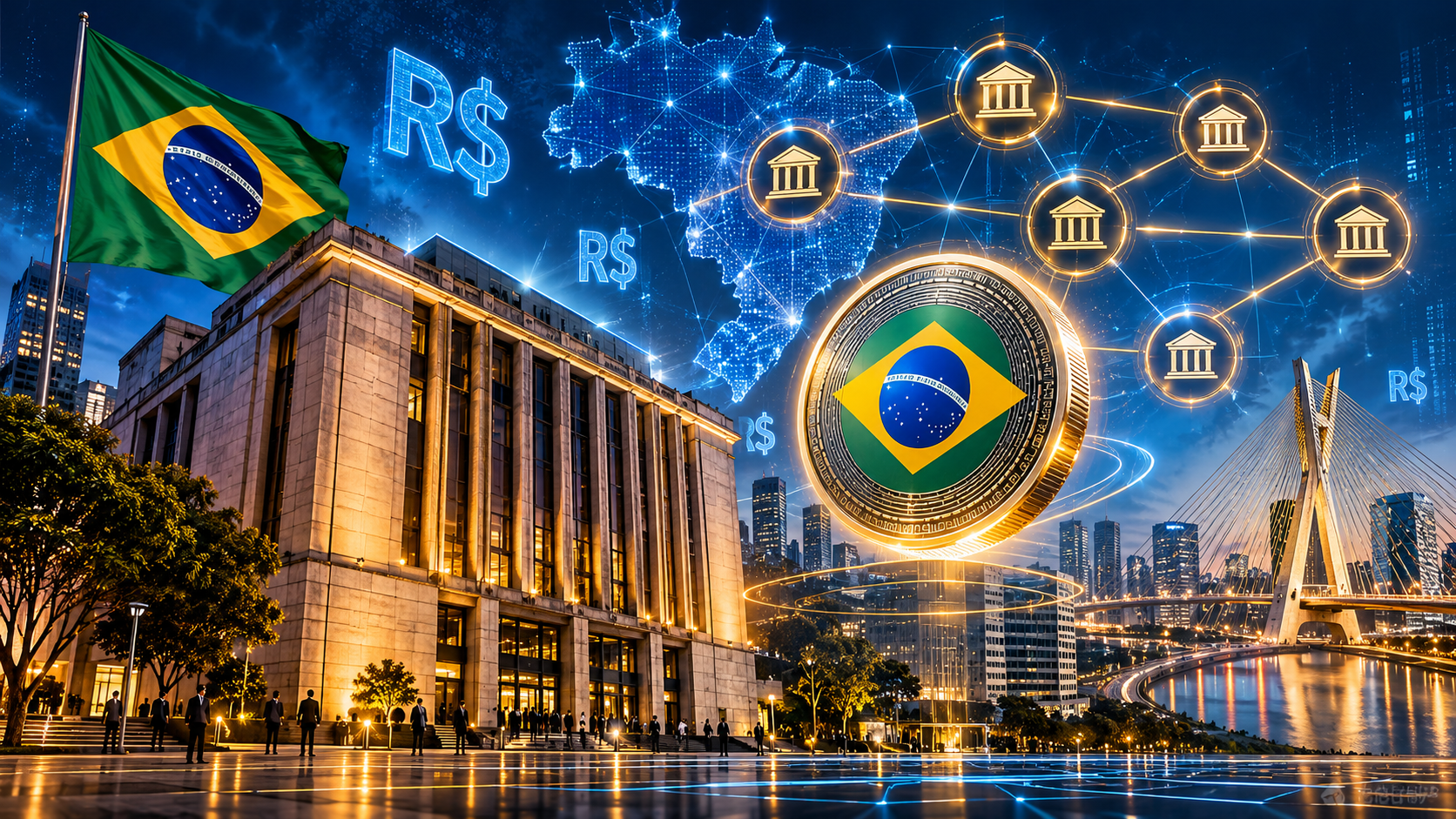
Brazilian stock exchange operator B3 has joined forces with six major financial institutions to develop a new Brazilian real-backed stablecoin called Open BRL, with operations targeted to begin in the first quarter of 2027.
The project brings together some of Brazil's biggest financial names, including Bradesco, BTG Pactual, Itaú Unibanco, Safra, Santander and XP.
But there is something particularly interesting about this initiative: the goal is not simply to create another cryptocurrency. It is to make digital money move more easily between financial institutions and help settle transactions involving tokenized assets.
Meet Open BRL: A Digital Real Backed by Real Money
Unlike Bitcoin, whose market price can rise or fall significantly, Open BRL is designed to maintain a fixed value against Brazil's national currency, the Brazilian real.
The proposed arrangement is straightforward:
- Deposit R$1 and receive one Open BRL token.
- Each token will be backed 1:1 by Brazilian reais.
- Banco B3 will handle issuance and maintain the reserves.
- Holders will be able to convert their tokens back into Brazilian reais.
In simple terms, one Open BRL is intended to represent one Brazilian real.
According to reporting by Valor Econômico, the reserve backing and redemption arrangement will be central to the project's design.
This structure is intended to provide confidence that the digital tokens are supported by actual currency rather than relying on market speculation.
Six Financial Giants Are Joining the Project
The partnership is particularly significant because it brings together institutions that traditionally compete for customers and business.
The six participating institutions are:
- Bradesco
- BTG Pactual
- Itaú Unibanco
- Banco Safra
- Santander
- XP
B3 and the participating institutions will jointly fund the initiative. However, the investment amounts have not been publicly disclosed.
The project will also have a management committee responsible for governance, operating rules, technology decisions and pricing arrangements.
Importantly, other financial institutions will be able to join from the beginning of operations.
That could help Open BRL develop into a shared financial infrastructure rather than a payment instrument controlled by a single bank.
Why Does Brazil Need Another Stablecoin?
Here is where the story becomes more interesting.
Imagine a financial institution developing its own digital currency. Another bank might not necessarily accept that token for transfers or settlements.
This creates a problem: different institutions can build separate digital financial systems without being able to communicate efficiently.
Open BRL aims to address that challenge.
By creating a common digital currency supported by multiple financial institutions, the initiative could make transfers between participating institutions more straightforward.
It could also support the settlement of tokenized stocks and other digital financial assets within B3's developing digital asset infrastructure.
Instead of relying entirely on traditional settlement processes, blockchain-based infrastructure could help automate parts of these transactions.
Could Open BRL Change the Future of Stock Trading?
One of the project's most interesting potential applications is tokenized securities.
Tokenization involves representing traditional financial assets, such as shares, in digital token form.
These tokens can potentially be transferred and settled using blockchain infrastructure.
For example, if an investor purchases a tokenized financial asset, Open BRL could serve as the digital currency used to complete the payment and settlement process.
This could help connect digital assets with the traditional financial system.
However, the actual efficiency gains will depend on how the technology is implemented, the participating institutions and the applicable regulatory requirements.
Brazil's Stablecoin Ambitions Are Getting Bigger
Brazil has been steadily exploring the use of digital assets in its financial system.
The country has already experimented with tokenization and the Drex digital currency project led by the Central Bank of Brazil.
Open BRL represents another development in this wider transition towards digital financial infrastructure.
There is an important distinction, though: Open BRL is a bank-backed stablecoin initiative, not the same thing as the Central Bank issuing a new national currency.
It is also not designed to replace the Brazilian real or automatically replace existing payment systems such as Pix.
Instead, its initial focus is on financial institutions, digital asset transfers and tokenized securities settlement.
The Big Question: Can Banks Build a Shared Digital Money System?
The planned Q1 2027 launch will be an important milestone, but the real test will come after the infrastructure becomes operational.
Can competing banks successfully use the same digital currency? Will additional financial institutions join? And can tokenized securities become a meaningful part of Brazil's financial markets?
These questions remain open.
For now, Open BRL sends a clear message: major traditional financial institutions are no longer treating blockchain-based finance as something happening only outside the banking industry.
They are increasingly looking to build the infrastructure themselves.
And when a stock exchange and six major financial institutions come together to create digital money, the next chapter of banking could look very different.
The Bottom Line
B3 and six major Brazilian banks — including Itaú, Bradesco, and Santander — are building Open BRL, a real-backed stablecoin, targeting Q1 2027.
The goal is to create a shared digital currency for interbank transfers and tokenized asset settlement, not to replace the Brazilian real or Pix.
Open BRL is backed 1:1 by Brazilian reais, with Banco B3 handling issuance and reserves.
The bigger question: Can competing banks successfully share a single digital currency? If they can, Brazil's financial infrastructure could become a model for the world.
About CoinAINews
CoinAINews Editorial Team covers cryptocurrency regulation, blockchain technology, digital asset markets, traditional finance, and developments shaping the global tech industry.
Disclaimer: This article is for informational purposes only and does not constitute financial or investment advice.