Europe Is Building a Unified Digital Asset Market — Christine Lagarde Sees a Huge Opportunity in Tokenization
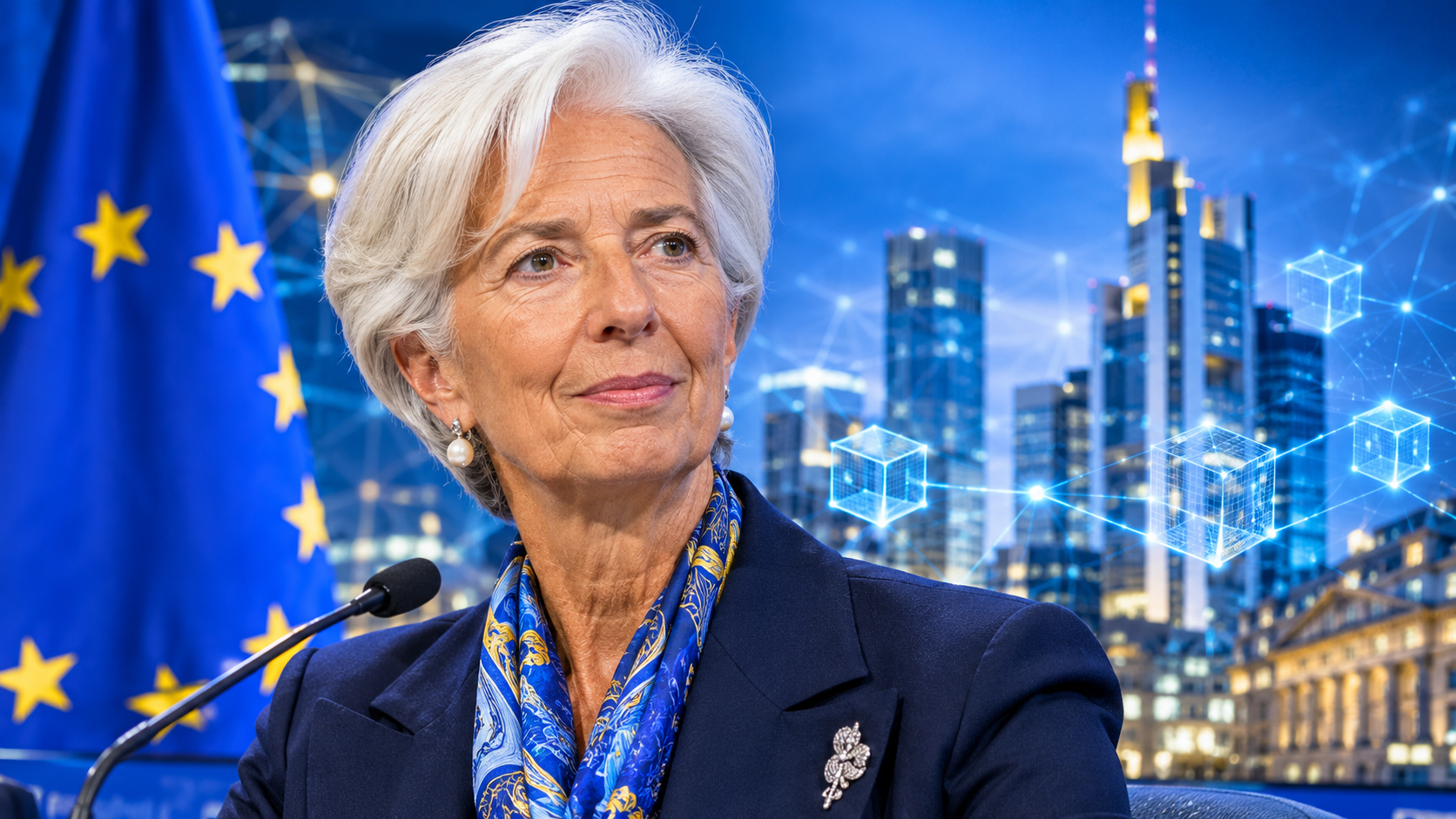
Europe could be heading toward a major transformation in the way financial assets are issued, traded and settled. European Central Bank (ECB) President Christine Lagarde believes blockchain-based tokenization offers the continent an opportunity to build a more connected digital financial market.
Her latest comments put the spotlight on an important question: Can Europe bring its fragmented financial markets together through blockchain technology?
Speaking at the 36th Frankfurt European Banking Congress on November 20, Lagarde highlighted tokenization as one of the biggest opportunities for Europe's financial system.
The development could have implications for banks, institutional investors, securities markets and the wider digital asset industry.
Christine Lagarde Says Tokenization Could Change Europe's Financial Markets
Lagarde explained that blockchain technology now makes it possible to tokenize securities, allowing them to be issued, traded and settled on a single platform.
She sees an opportunity to develop a genuine single market for digital assets across Europe, rather than allowing different financial platforms to operate independently under incompatible systems.
The challenge is significant because European financial markets have historically operated across different national infrastructures and regulatory arrangements.
Tokenization could help reduce these barriers by making financial transactions more integrated and efficient.
However, Lagarde also warned that Europe has a limited window to establish common standards before the market becomes divided between incompatible platforms.
What Is Tokenization and Why Does It Matter?
Tokenization involves representing real-world or traditional financial assets as digital tokens on a blockchain or distributed ledger.
These assets can include:
- Government and corporate bonds.
- Shares and other securities.
- Real estate investments.
- Money market fund units.
- Other financial instruments.
Instead of relying on multiple separate systems to record ownership and process transactions, tokenization can allow assets and payments to move through connected digital infrastructure.
For financial institutions, this could mean faster settlement, improved operational efficiency and potentially lower transaction costs.
It could also make certain investments more accessible through fractional ownership, although the actual benefits depend on regulation, platform design and market adoption.
ECB Has Already Taken a Major Step With Its Pontes Project
Lagarde's latest comments are not simply a vision for the distant future. The ECB has already started developing infrastructure to support tokenized financial markets.
In September 2026, the Eurosystem launched Pontes, a system designed to allow wholesale transactions involving tokenized assets to settle in central bank money.
The project is particularly important because it connects digital asset transactions with the established central bank settlement infrastructure.
Lagarde also highlighted a significant development in her November 20 speech: the European Stability Mechanism had settled a €1 billion digitally native bond through Pontes earlier in November.
This demonstrates that the initiative is moving beyond experimentation toward practical financial applications.
Appia Could Help Connect Europe's Digital Asset Platforms
Another important part of the ECB's strategy is Project Appia.
The initiative is intended to help develop an integrated European financial ecosystem using tokenization and distributed ledger technology.
The objective is to establish common standards and infrastructure so that different digital financial platforms can work together instead of becoming isolated systems.
For banks and financial institutions, interoperability will be essential.
Without common rules, different blockchain networks could create new barriers instead of removing existing ones.
Lagarde stressed that infrastructure alone would not be enough. European lawmakers will also need to establish common rules to support the development of the market.
What Could This Mean for the Crypto Industry?
The ECB's direction could be significant for the broader digital asset industry.
Tokenization is increasingly attracting attention because it brings traditional financial instruments into blockchain-based environments.
If European institutions expand their use of tokenized securities, demand could grow for blockchain infrastructure, digital settlement systems, custody solutions and institutional-grade financial services.
However, this does not mean that every cryptocurrency will benefit.
The development is primarily focused on regulated financial assets and institutional infrastructure. Its impact on individual cryptocurrencies will depend on which networks and technologies financial institutions eventually adopt.
For investors, the more important development may be the growing acceptance of blockchain technology within traditional finance.
The Bigger Picture: Europe Wants a Connected Digital Financial System
Lagarde's comments reflect a broader ambition to strengthen Europe's financial independence and competitiveness.
The ECB is working on multiple initiatives, including the digital euro, Pontes and Appia, to prepare the financial system for a more digital future.
These projects serve different purposes, but together they reflect an effort to modernize payments and financial markets while maintaining the role of central bank money.
The biggest challenge will be ensuring that technology, regulation and financial institutions move in the same direction.
If Europe succeeds, tokenization could become an important part of its financial infrastructure in the coming years.
For now, Lagarde's message is clear: Europe has an opportunity to build a unified digital asset market, but it cannot afford to delay the decisions needed to make it happen.
The Bottom Line
ECB President Christine Lagarde has called tokenization one of the biggest opportunities for Europe's financial system.
The ECB has already launched the Pontes project to settle tokenized transactions in central bank money and is developing Project Appia for interoperability.
Europe has a limited window to establish common standards before the market fragments into incompatible platforms.
If successful, tokenization could become a core part of Europe's financial infrastructure — and a major signal for blockchain adoption in traditional finance.
About CoinAINews
CoinAINews Editorial Team covers cryptocurrency regulation, blockchain technology, digital asset markets, traditional finance, and developments shaping the global tech industry.
Disclaimer: This article is for informational purposes only and does not constitute financial or investment advice.
Source: European Central Bank – Christine Lagarde's keynote speech, November 20, 2026.