
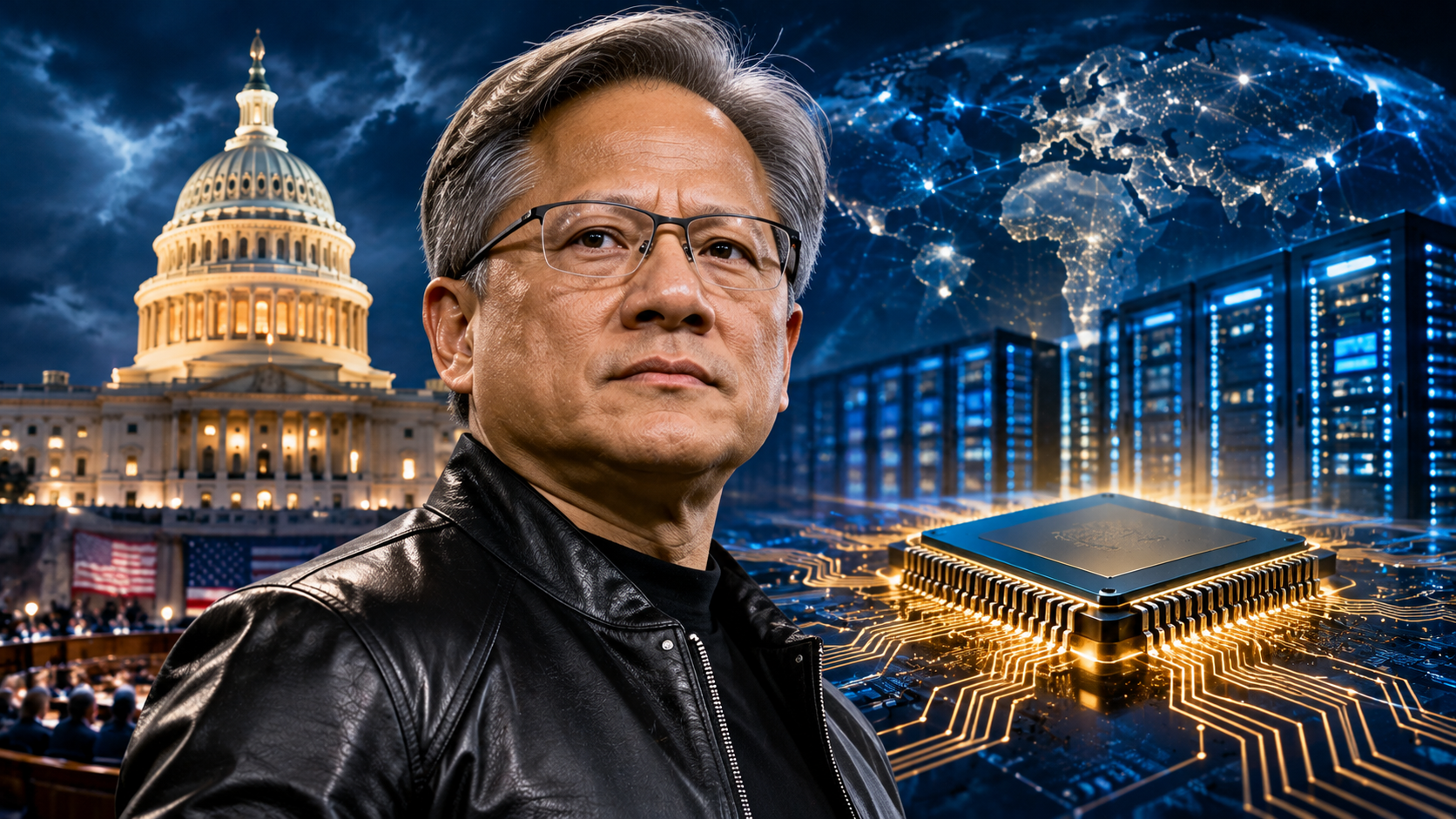
Jensen Huang Wants His Nvidia Job Back—But Washington Has Serious Questions
Jensen Huang has broken his silence following his dramatic departure from Nvidia, leaving the door open for a possible return to the company he helped build into one of the world's most influential artificial intelligence businesses.
In his first public statement since stepping down, Huang said he would be honored to return as chief executive if Nvidia's board decided that bringing him back was in the best interests of the company, its shareholders, employees and the United States.
But the timing of his statement could hardly be more complicated. Nvidia is dealing with questions surrounding national security, alleged foreign intelligence connections, advanced AI chip exports and growing political scrutiny in Washington.
The controversy has transformed what was once a leadership story into a much larger issue involving technology, corporate governance and America's position in the global AI race.
Jensen Huang Says He Is Ready to Return
Huang's statement marked his first major public response since leaving Nvidia.
He acknowledged that he had made serious personal mistakes and said he regretted creating problems for the company's board. He also expressed gratitude to supporters who had contacted him following his departure.
According to Huang, employees, investors, business partners and customers had urged him to return to the CEO position.
He made it clear that he would consider coming back if the board believed such a decision would benefit Nvidia and its stakeholders.
His message was carefully worded. Huang did not announce a formal comeback, nor did he claim that Nvidia had offered him his former position. Instead, he placed the decision entirely in the hands of the board.
That distinction matters because the company's leadership situation remains unsettled, and the board has been dealing with issues that go beyond simply choosing its next CEO.
Why Did Jensen Huang Leave Nvidia?
Huang's departure followed reports involving alleged personal relationships and concerns about possible connections to a foreign intelligence operation.
Reports surrounding the controversy raised questions about a woman alleged to have links to Chinese intelligence and about potential national security implications involving access to advanced technology.
These allegations have not established that Nvidia's technology or confidential information was compromised.
The company previously said its board had launched an independent investigation after reports raised concerns that Huang may have been targeted by a foreign intelligence effort.
Nvidia said the investigation would examine available information, with independent directors and outside legal counsel overseeing the review.
Huang has said he accepts responsibility for his personal mistakes and will cooperate with the investigation.
The situation has placed unusual pressure on one of the most powerful executives in the technology industry.
Washington Wants Answers From the Nvidia Founder
The controversy is no longer limited to Nvidia's boardroom.
U.S. lawmakers have also sought answers from Huang regarding Nvidia's business dealings, security protocols and the potential risks surrounding advanced AI chips reaching China.
Huang is expected to appear for a closed-door, transcribed interview before three House committees on December 1, 2026.
The committees include the House Foreign Affairs Committee, the House Select Committee on the Chinese Communist Party and the House Intelligence Committee.
Lawmakers are expected to examine questions involving technology exports, potential national security risks and the company's relationship with entities connected to China.
The congressional scrutiny comes at a particularly sensitive time for the semiconductor industry. Washington has been tightening restrictions designed to prevent advanced American AI technology from reaching military or strategic competitors.
Nvidia's chips are among the most important components powering modern AI systems, making the company's export policies a major issue for U.S. policymakers.
Could Jensen Huang Actually Return?
Huang's willingness to return has attracted attention, but it does not mean Nvidia is preparing to reinstate him.
The company's board has indicated that it is not planning to bring Huang back as CEO and is continuing its search for a new leader.
That leaves Huang's statement as an expression of willingness rather than a confirmed comeback plan.
Even if supporters want him back, the board faces difficult questions. It must consider shareholder interests, corporate reputation, regulatory risks, internal governance and the ongoing investigation.
The company is also operating in an environment where leadership decisions can influence investor confidence and the broader AI industry.
A return would therefore require more than public support. It would depend on the board's assessment of the situation and whether it believes Huang's leadership would strengthen Nvidia at a critical moment.
Nvidia's AI Dominance Adds More Pressure
Nvidia's leadership crisis is unfolding while demand for AI computing continues to reshape the global technology industry.
The company has become a central supplier of the processors used in AI data centers, cloud computing infrastructure and advanced machine-learning systems.
Major technology companies are spending billions of dollars to expand their AI capabilities, and Nvidia remains a key player in that investment cycle.
This makes the leadership uncertainty particularly important.
Investors are not simply watching the personal controversy surrounding Huang. They are also evaluating whether Nvidia can maintain its competitive advantage, manage political pressure and continue delivering products to customers around the world.
Any disruption to the company's leadership or business strategy could attract significant attention from financial markets.
At the same time, Nvidia's scale means that the company's decisions carry consequences well beyond Silicon Valley.
The Bigger Battle: AI, China and National Security
The story highlights a growing challenge facing America's technology industry.
AI chips are increasingly viewed as strategic assets, with governments treating semiconductor access as an issue of economic power and national security.
Companies operating in this sector must balance commercial opportunities with export restrictions, compliance requirements and geopolitical tensions.
Nvidia sits directly at the center of that debate.
The company has faced continuing questions over how its advanced chips can be sold internationally while complying with U.S. restrictions on certain technology exports.
The congressional investigation could bring renewed attention to those policies and potentially influence how the industry approaches overseas customers.
For Nvidia, the challenge is to maintain its global business while demonstrating that its technology, security procedures and corporate governance meet the expectations of regulators.
What Happens Next?
The coming weeks could be important for Nvidia's future leadership and its relationship with Washington.
Huang's congressional interview is expected to bring further scrutiny to the questions surrounding his departure and the company's national security concerns.
Meanwhile, Nvidia's board must continue evaluating leadership options while its independent investigation proceeds.
For now, Huang has made one thing clear: he has not ruled out returning to the company he founded.
But whether that possibility becomes reality is another question entirely.
Nvidia is facing a leadership decision at a time when AI competition is accelerating, international tensions remain high and the company's role in the global technology economy continues to expand.
The next chapter could determine not only who leads Nvidia, but also how one of the world's most powerful AI companies navigates an increasingly complicated political and technological landscape.
The world will be watching Nvidia's next move.
The Bottom Line
Jensen Huang says he is ready to return as Nvidia's CEO if the board wants him back.
But his comeback is complicated by a congressional investigation, national security questions, and an internal board review.
Huang is scheduled to testify before three House committees on December 1, 2026.
Nvidia's board has not indicated it plans to reinstate him and is continuing its search for a new leader.
The outcome will shape not just Nvidia's future — but America's position in the global AI race.
About CoinAINews
CoinAINews Editorial Team covers cryptocurrency regulation, blockchain technology, digital asset markets, traditional finance, and developments shaping the global tech industry.
Disclaimer: This article is for informational purposes only and does not constitute financial or investment advice.