Russia Opens the Crypto Floodgates: Bitcoin, Ethereum and USDT Get Green Light as November 17 Marks a Major Turning Point
Russia is taking another significant step toward bringing cryptocurrency into its regulated financial system.
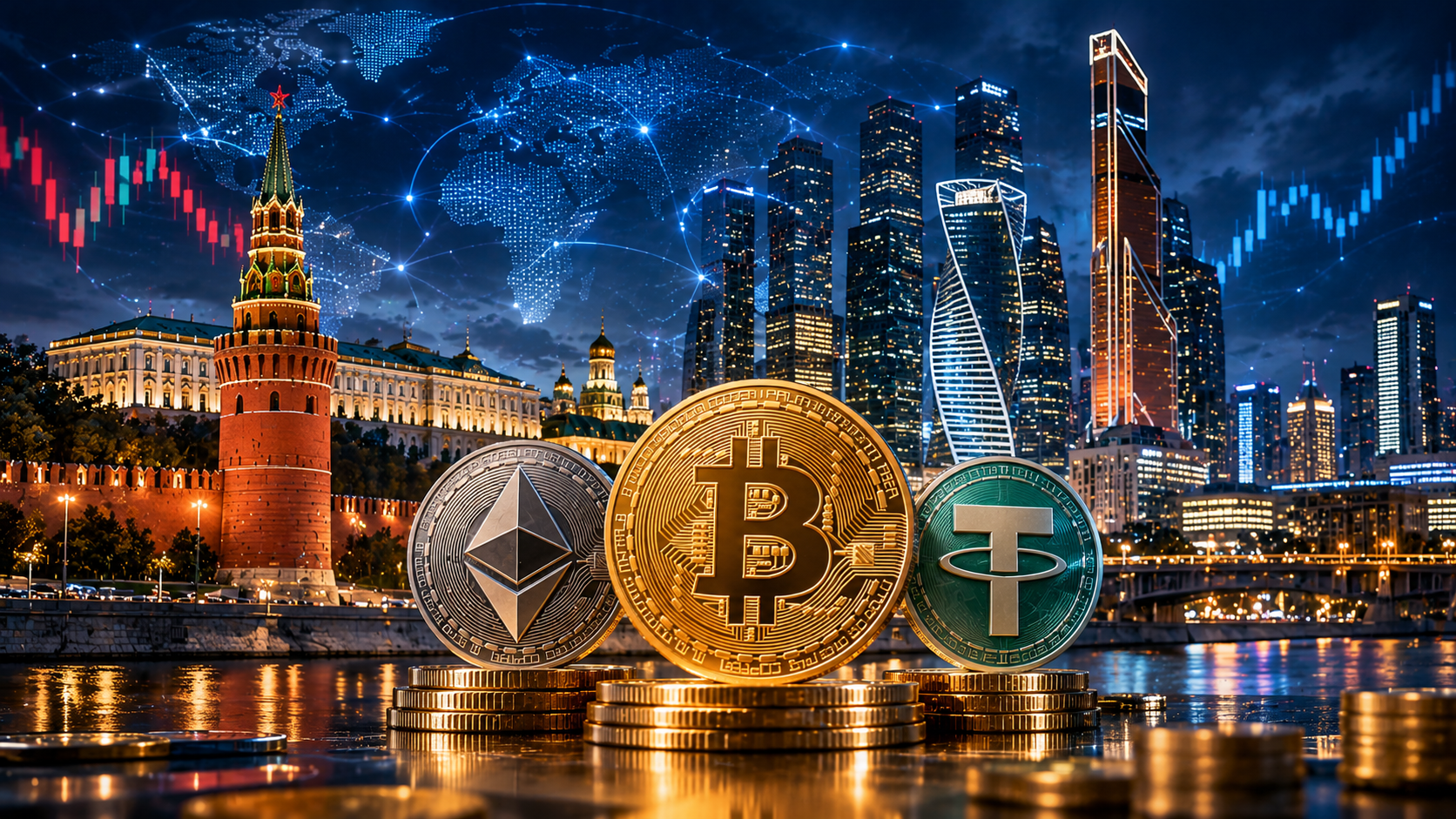
The Bank of Russia has approved Bitcoin (BTC), Ethereum (ETH) and Tether's USDT for trading on domestic exchanges under a new regulatory framework that takes effect on November 17, 2026. The decision creates a regulated route for ordinary investors to gain exposure to some of the world's most widely traded digital assets through authorized financial intermediaries.
The development is particularly important because Russia previously maintained a much more restrictive approach toward cryptocurrency trading through its domestic financial system. Now, rather than keeping the market entirely outside traditional finance, the country is moving toward a framework that allows approved institutions to facilitate crypto transactions.
However, this is not an unrestricted opening of the Russian cryptocurrency market. Retail investors will face annual purchase limits and mandatory risk assessments, while qualified investors will have broader access.
The Moscow Exchange has also announced plans to introduce its own digital currency trading market from December 1.
Together, these developments suggest that Russia is preparing to make cryptocurrency trading a more established part of its financial infrastructure.
Russia Gives Bitcoin, Ethereum and USDT a Place in Its Regulated Financial Market
The latest decision from the Bank of Russia identifies three digital assets for access by non-qualified investors: Bitcoin, Ethereum and USDT.
The selection is significant because the three assets serve different purposes in the cryptocurrency market.
Bitcoin remains the largest cryptocurrency by market capitalization and is widely viewed as a digital store-of-value asset. Ethereum supports a broad ecosystem of decentralized applications, smart contracts and tokenized financial products.
USDT, meanwhile, is one of the world's most widely used dollar-pegged stablecoins. Traders frequently use it to move between crypto assets and maintain dollar-linked liquidity without converting their holdings into traditional bank deposits.
Allowing these assets to enter regulated exchange trading gives Russian investors a more structured route to access the cryptocurrency market.
The decision also signals that Russian regulators are focusing on liquidity and established trading activity when determining which cryptocurrencies can be made available to ordinary investors.
This does not mean every cryptocurrency will receive the same treatment. The initial framework is selective, and access to other digital assets will depend on the applicable regulatory requirements.
November 17: What Changes for Russian Crypto Investors?
November 17 is the key date for the new regulatory rules.
From that date, exchanges will be able to admit the approved digital assets for public circulation under the new framework.
For ordinary investors, however, the opportunity comes with restrictions.
Non-qualified investors will be allowed to purchase up to 300,000 Russian rubles' worth of cryptocurrency annually through a single intermediary. The limit applies separately through each intermediary, so investors should not interpret it as an unlimited purchasing allowance.
Investors will also have to complete a mandatory assessment before entering cryptocurrency transactions.
The purpose is to ensure that customers understand the risks associated with digital assets, including sharp price fluctuations and the possibility of losing money.
Qualified investors will have broader access to cryptocurrencies traded through the regulated market and will not face the same annual purchase cap.
Nevertheless, access to a wider range of digital assets does not remove the underlying investment risks.
The Bank of Russia's approach reflects an attempt to balance market participation with investor protection.
Moscow Exchange Targets December 1 for Bitcoin, Ethereum and USDT Trading
The regulatory announcement is only one part of Russia's wider crypto strategy.
The Moscow Exchange has separately confirmed plans to launch an organized digital currency market on December 1, 2026.
Its initial trading list is expected to include:
- Bitcoin (BTC)
- Ethereum (ETH)
- Tether (USDT)
According to the exchange's announcement, trading will use its existing stock-market infrastructure, with the National Clearing Centre handling clearing operations.
The planned trading schedule is 6:50 a.m. to 11:50 p.m. Moscow time, matching the exchange's stock-market timetable.
The exchange expects to introduce pilot transactions initially, with additional participants joining as they become ready.
This distinction matters: November 17 marks the effective date of the regulatory framework, whereas December 1 is the Moscow Exchange's planned start for its organized trading market.
The two developments are connected, but they are not the same event.
For the Russian financial industry, the move could create new opportunities for brokers, institutional investors, exchanges and other authorized market participants.
Why Russia Is Moving Away From Its Earlier Crypto Restrictions
Russia's changing approach to digital assets did not happen overnight.
For years, policymakers faced a difficult question: how could the country regulate cryptocurrency without allowing it to become an uncontrolled alternative to the traditional financial system?
The latest framework represents a more structured answer.
Instead of treating cryptocurrency trading as something that should remain outside the domestic financial infrastructure, Russia is building rules around intermediaries, investor eligibility, exchange operations and custody-related services.
A major legislative step came when President Vladimir Putin signed a law on digital currencies and digital rights in August 2026. The main provisions took effect on September 1.
The framework establishes a legal foundation for cryptocurrency circulation and regulated financial services connected to digital assets.
There is also a transition period for market participants to obtain the necessary permissions and adapt to the new requirements.
This suggests that Russia is not simply allowing people to buy Bitcoin. It is attempting to establish a regulated market with identifiable institutions and clearer responsibilities.
The USDT Question: A Dollar-Pegged Stablecoin in Russia's Regulated Market
The inclusion of USDT deserves particular attention.
Bitcoin and Ethereum are volatile digital assets. USDT serves a different role because it is designed to maintain a value close to one US dollar.
Stablecoins are important to global crypto markets because they provide liquidity for trading, settlement and transfers between digital assets.
For Russian investors, access to USDT through regulated trading infrastructure could provide another way to participate in cryptocurrency markets.
However, the inclusion of USDT also raises questions about international financial restrictions.
Tether operates under its own compliance policies and can freeze certain wallet addresses. In addition, the Moscow Exchange and its National Clearing Centre face US sanctions.
That creates an important practical issue: how will USDT-related transactions interact with international sanctions requirements and Tether's compliance policies?
The presence of USDT on a Russian trading list does not automatically guarantee unrestricted access to every USDT service or international transfer.
The operational details will matter as the market develops.
Is Russia Moving Ahead of the United States on Crypto Regulation?
The announcement is likely to renew comparisons between Russia and the United States.
Both countries have been working through questions involving cryptocurrency exchanges, investor protections, stablecoins and the role of digital assets in traditional finance.
The US regulatory debate has included the CLARITY Act, which seeks to establish a clearer framework for digital asset market structure.
Russia's latest decision demonstrates that its authorities are moving forward with a defined framework for selected cryptocurrencies and regulated domestic trading.
But comparing the two countries requires some caution.
Russia's decision concerns access to three selected cryptocurrencies through a specific domestic regulatory structure. The US debate involves a broader set of questions about the division of regulatory authority, market structure and the treatment of different digital assets.
One country's regulatory progress does not automatically mean the other has failed.
Still, Russia's November 17 milestone gives the global crypto industry another example of how governments are approaching regulated digital asset markets.
The Bottom Line
Russia's decision to approve Bitcoin, Ethereum and USDT for regulated trading marks a significant shift in the country's approach to digital assets.
The November 17 framework creates a structured route for investors, with annual limits and mandatory risk assessments for non-qualified participants.
The Moscow Exchange's planned December 1 launch adds another layer, bringing crypto trading into the country's existing financial infrastructure.
But this is not an unrestricted opening. Russia is opening the market on its own terms — with strict controls, investor protections and unresolved questions about USDT and international sanctions.
For the global crypto industry, the development is another example of how governments are experimenting with regulated digital asset markets — each in their own way.
About CoinAINews
CoinAINews Editorial Team covers cryptocurrency regulation, blockchain technology, digital asset markets and developments shaping the global crypto industry.
Disclaimer: This article is for informational purposes only and does not constitute financial or investment advice. Cryptocurrency markets are volatile, and readers should conduct independent research before making investment decisions.